%22%20fill%3D%22%23498AC7%22%2F%3E%0A%3Cg%20clip-path%3D%22url(%23clip0_14993_5160)%22%3E%0A%3Cpath%20d%3D%22M426.51%20180.638L412.599%20179.279L417.745%20126.608L431.274%20127.93L426.51%20180.638Z%22%20fill%3D%22white%22%2F%3E%0A%3Cpath%20d%3D%22M473.93%20185.447L460.019%20184.088L465.301%20130.026L478.829%20131.347L473.93%20185.447Z%22%20fill%3D%22white%22%2F%3E%0A%3Cpath%20d%3D%22M493.649%20187.373L479.721%20186.012L485.002%20131.95L498.531%20133.272L493.649%20187.373Z%22%20fill%3D%22white%22%2F%3E%0A%3Cpath%20d%3D%22M431.901%20146.126L447.142%20128.48L462.705%20130L442.263%20155.599L455.974%20184.166L438.776%20182.486L430.265%20162.871L431.901%20146.126Z%22%20fill%3D%22white%22%2F%3E%0A%3Cpath%20d%3D%22M539.689%20154.918C539.689%20154.918%20539.708%20154.727%20539.716%20154.64C539.84%20152.651%20542.627%20150.904%20545.568%20150.261L546.876%20136.872C537.245%20137.353%20528.138%20143.239%20527.142%20153.429C527.091%20153.951%20527.058%20154.474%20527.061%20154.984C527.224%20157.264%20527.695%20160.172%20528.81%20162.773C529.727%20164.882%20531.07%20166.768%20533.06%20167.963C537.804%20170.797%20541.084%20171.363%20543.491%20171.528L544.827%20159.107C541.508%20158.396%20539.748%20157.013%20539.706%20154.92L539.689%20154.918Z%22%20fill%3D%22white%22%2F%3E%0A%3Cpath%20d%3D%22M551.606%20176.868C551.606%20176.868%20551.587%20177.059%20551.579%20177.146C551.455%20179.135%20548.625%20180.07%20545.683%20180.713L544.375%20194.102C554.007%20193.621%20563.159%20188.529%20564.154%20178.339C564.205%20177.818%20564.239%20177.294%20564.236%20176.785C564.073%20174.504%20563.602%20171.597%20562.487%20168.995C561.569%20166.887%20560.226%20165%20558.236%20163.805C553.492%20160.972%20550.092%20160.376%20547.684%20160.229L546.549%20171.844C549.868%20172.555%20551.547%20174.773%20551.589%20176.866L551.606%20176.868Z%22%20fill%3D%22white%22%2F%3E%0A%3Cpath%20d%3D%22M555.54%20157.45L567.714%20157.358C568.837%20145.864%20560.311%20137.904%20548.834%20136.782L549.982%20136.894L548.697%20150.04C552.925%20150.436%20555.314%20152.39%20555.54%20157.45Z%22%20fill%3D%22white%22%2F%3E%0A%3Cpath%20d%3D%22M537.755%20173.46L525.58%20173.552C524.457%20185.046%20529.801%20192.696%20541.278%20193.817L542.566%20180.636C538.339%20180.241%20537.98%20178.521%20537.755%20173.46Z%22%20fill%3D%22white%22%2F%3E%0A%3Cpath%20d%3D%22M521.49%20180.017C521.434%20180.591%20521.294%20181.121%20521.052%20181.624C520.277%20186.868%20515.596%20189.5%20510.257%20188.978L496.346%20187.619L497.754%20173.204L506.327%20174.041C507.284%20174.135%20508.142%20173.429%20508.236%20172.472L510.288%20151.467C510.382%20150.51%20509.676%20149.651%20508.719%20149.558L500.164%20148.722L501.508%20133.528L515.402%20134.885C520.931%20135.426%20525.154%20139.999%20524.614%20145.528L524.074%20151.058L521.492%20179.999L521.49%20180.017Z%22%20fill%3D%22white%22%2F%3E%0A%3C%2Fg%3E%0A%3Cdefs%3E%0A%3CclipPath%20id%3D%22clip0_14993_5160%22%3E%0A%3Crect%20width%3D%22152.248%22%20height%3D%2257.4818%22%20fill%3D%22white%22%20transform%3D%22translate(418%20124)%20rotate(5.58)%22%2F%3E%0A%3C%2FclipPath%3E%0A%3C%2Fdefs%3E%0A%3C%2Fsvg%3E%0A)
Where Are They Now?

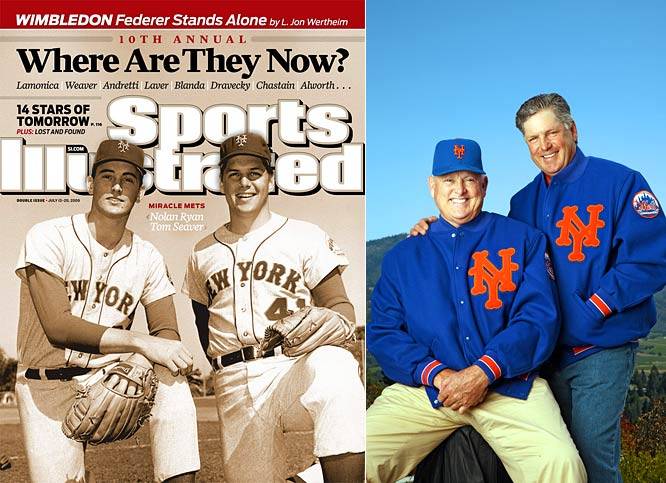
The club was a baseball comedy act from the year of its premature birth, 1962, right through 1968, losing an average of 105 games a season. And then came the surprise of '69. Elsewhere it was a horrible year, but New York witnessed a miracle: the Mets winning 100 games in the regular season, then beating the Baltimore Goliaths in the World Series. The miracle of Flushing Meadows, Queens. Tom Seaver, the ace on the '69 team, and Nolan Ryan, its young fireballer, reunited recently at Tom's vineyard in California. Ryan is the president of the Texas Rangers.
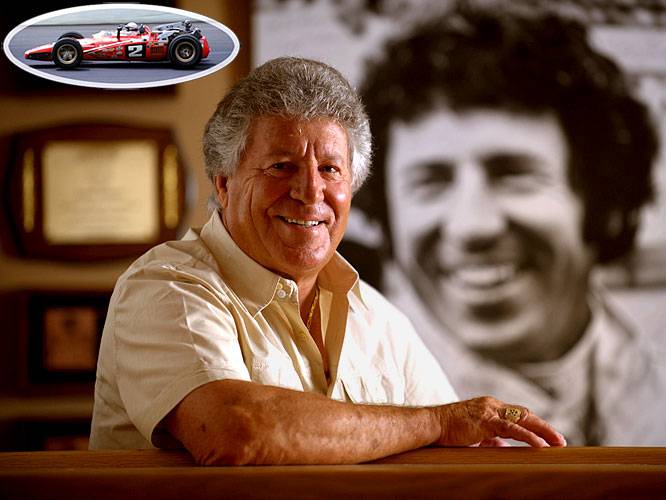
A four-time IndyCar series champ and the Associated Press's Driver of the Century, Andretti remains the only person to win the Indianapolis 500, the Daytona 500 and the Formula One driving championship. Lately he has been pouring much of his time and passion into a pursuit as exacting, if not quite as dangerous, as racing. Together with former Kmart CEO Joe Antonini, he owns and operates a winery in Napa, Calif. Founded in 1996 as little more than a hobby, Andretti Winery is now a $3.5 million business that produces a range of award-winning wines.
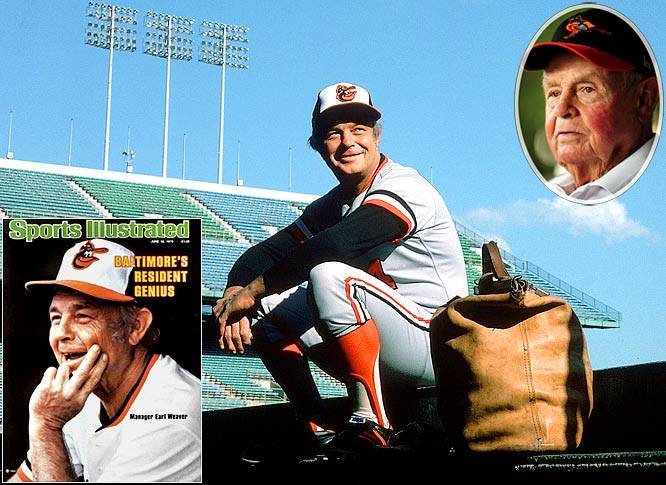
Before laptops, spreadsheets and VORP, the wizard of Baltimore was winning pennants by following his own internal baseball calculus. Though he managed in the majors 23 years ago, Weaver still has acute insights into what works and what doesn't in the game he loves. At 78, he spends his time cooking, visiting the horse track, watching baseball on TV and playing gin rummy with buddies at his country club in Miami, sometimes after a round of golf, though not as often now that needing driver-three-wood-eight-iron to reach a par-4 has sapped much of the fun from his game.
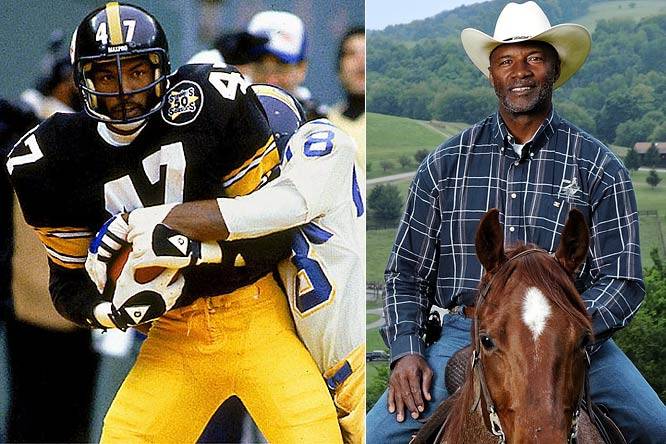
Blount was a five-time Pro Bowl selection, a vital member of four Super Bowl Championship teams and a Hall of Fame inductee in 1989, his first year of eligibility. In 1983, the year he retired from the NFL, he founded the Mel Blount Youth Home in his hometown of Vidalia, Ga., a nonprofit aimed at helping troubled and disadvantaged young males ''get back to a place where they could contribute to society,'' as he puts it. In '89, he opened a second facility in Claysville, an hour southwest of Pittsburgh. While Mr. Mel, as he's known there, is officially the CEO of the homes, he's also, by turns, groundskeeper (covering his extensive property on horseback), chauffeur, father figure, social worker, preacher and emotional backstop.
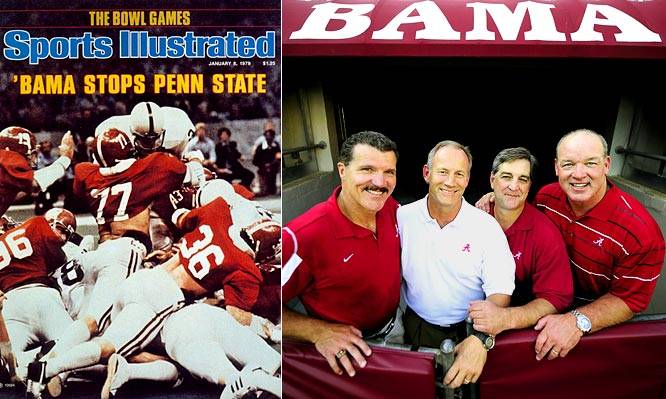
With less than seven minutes left in the '79 Sugar Bowl, linebacker Barry Krauss (77) tackled Penn State tailback Mike Guman six inches from the goal line on fourth down--a stop that preserved Alabama's 14-7 win and propelled the Crimson Tide to the national championship. Tide defenders (from left) Krauss, Rich Wingo, Murray Legg, and Marty Lyons continue to draw life lessons from their famous stop of Guman. Krauss played 11 years in the NFL and is now a broadcaster for the Colts and Crimson Tide. Wingo, who spent five seasons with the Packers, and Legg are both in real estate in Birmingham. Lyons played 11 seasons with the Jets and is now a vice president for a Long Island stadium design firm.

Seles burst onto the scene two decades ago, came to dominate women's tennis--and then traveled a rocky road to self-discovery. From January 1991 to January '93, she won seven of the eight Grand Slam tournaments she entered. In the spring of 1993, at a French Open tune-up event in Hamburg, Germany, a deranged fan who later claimed he was acting to preserve Steffi Graf's dominance, plunged a nine-inch serrated boning knife into Seles's left shoulder. After a period of ''darkness'' (her word) she returned to tennis in the summer of 1995. But she was a shard of her old self, ''not even close'' to the same player, she admits. As a teen prodigy Seles was focused solely on her career, but now she finds fulfillment in charity work, such as volunteering at a Florida animal shelter.
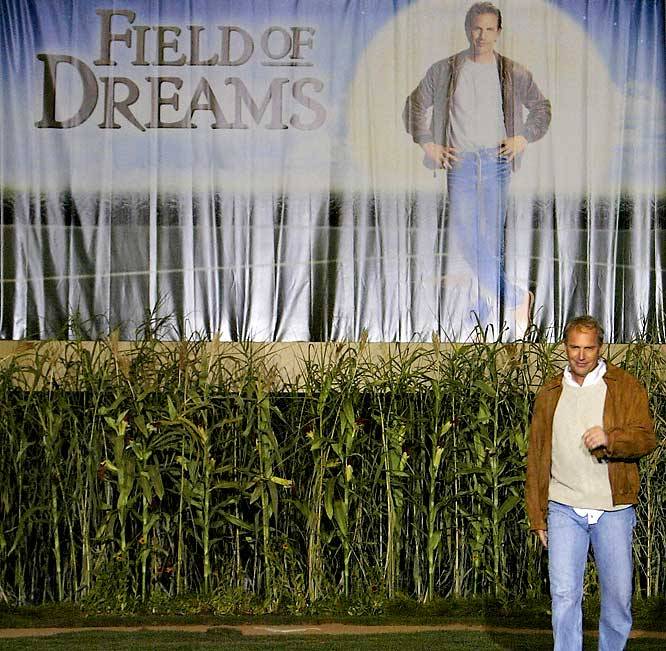
Some didn't get it, but for those who believe in the magic of baseball, this paean to the national pastime went straight to the heart. Twenty years later Field of Dreams remains the quintessential moving-image expression of why we love baseball. Not major league baseball, which in the past two decades, like a body sliced open on an operating table, has both fascinated and repulsed us, but baseball as we discovered it and as we prefer to preserve it. For absolutely nailing that social context, the movie, too, is timeless.
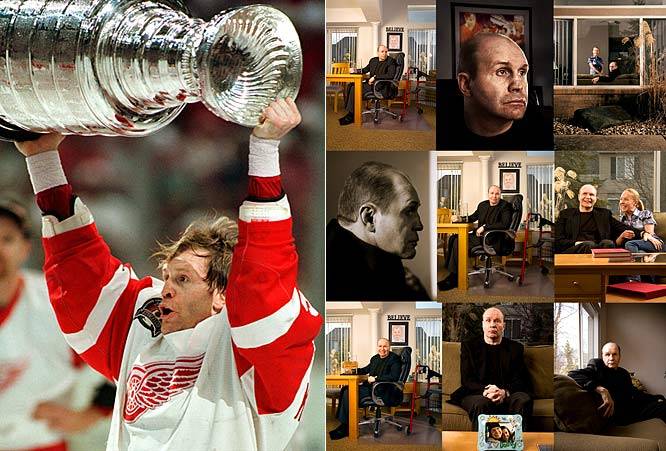
One of the pioneering Russians in the NHL and a standout backliner, Konstantinov, a shot-in-the-dark 11th-round draft pick in 1989, became a Stanley Cup hero in Detroit before tragedy altered his life's plan. In 1997, he suffered life-threatening head injuries in a limousine crash following a party to celebrate Detroit's first Stanley Cup in 42 years. He has no memories of the crash, but certainly remembers who he is. He is, in fact, in better condition than most people who have suffered catastrophic brain trauma. Konstantinov occasionally attends Red Wings games at Joe Louis Arena, sitting at an empty stall in the dressing room and moving to the bench to watch the warmup. The players say he never initiates conversation but always responds with a few words.

Ten years after she nailed the penalty kick that gave the U.S. a victory over China in the finals of the 1999 Women's World Cup and then seared the moment into the nation's collective consciousness by tearing off her jersey in celebration, Chastain is still consumed by the sport. She'll turn 41 this month, but she's still playing, in midfield for the new Women's Professional Soccer league's FC Gold Pride, which plays its home games just a mile from her house, at her alma mater, Santa Clara.
